What is CTR Manipulation? The Complete Guide (2025)

What is CTR Manipulation? The Complete Guide (2025)
Google said click data does not drive organic rankings. Then 2,500 pages of ContentAPI docs leaked in May 2024 and NavBoost was in them: a click-based re-ranker that has been running since 2005.
CTR manipulation is the name SEOs use for the obvious next sentence. If NavBoost re-ranks on clicks, someone will try to add clicks.
What the term actually means
You generate searches for a keyword, click your own result (or pay a platform to), and hope NavBoost files those visits as goodClicks: long dwell, real scroll, maybe a second page, no instant return to the SERP.
NavBoost sits on a 13-month window. More goodClicks relative to impressions can lift a URL. More badClicks (pogo-sticks) can bury it. The loop is the product: visibility, more organic clicks, stronger history.
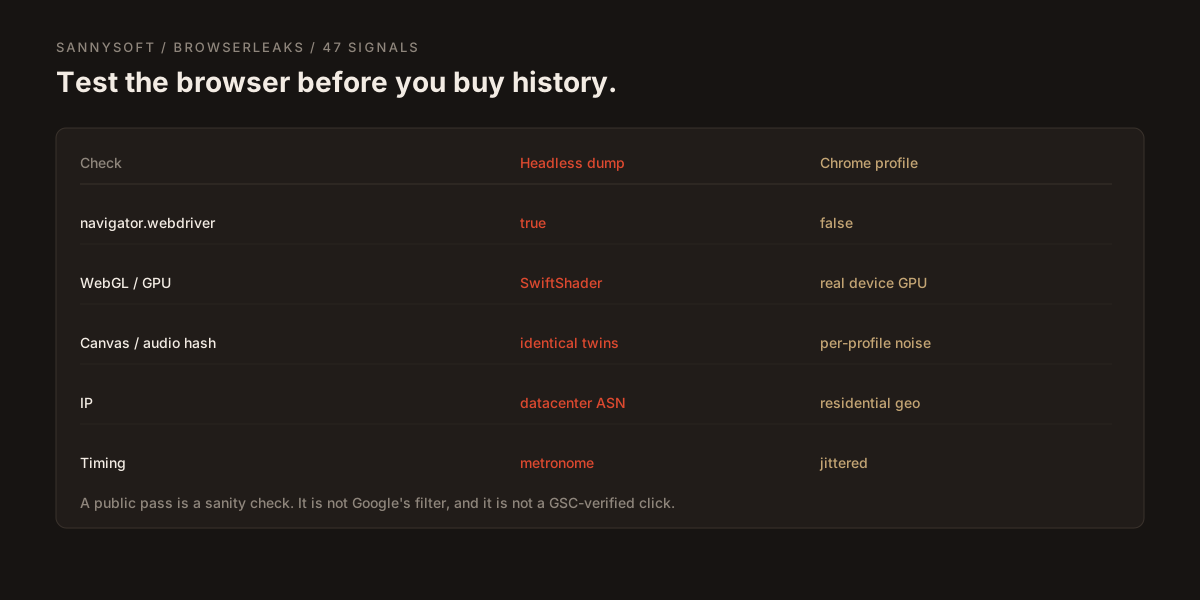
Headless Chrome, datacenter IPs, and cloned fingerprints are the version that gets squashed. Residential IPs, consistent fingerprints, and a session mix that is not a metronome are the version that can survive the authenticity filters the leak called out (squashed vs unsquashed clicks). Authenticity is the whole game. Volume without it is an invoice.
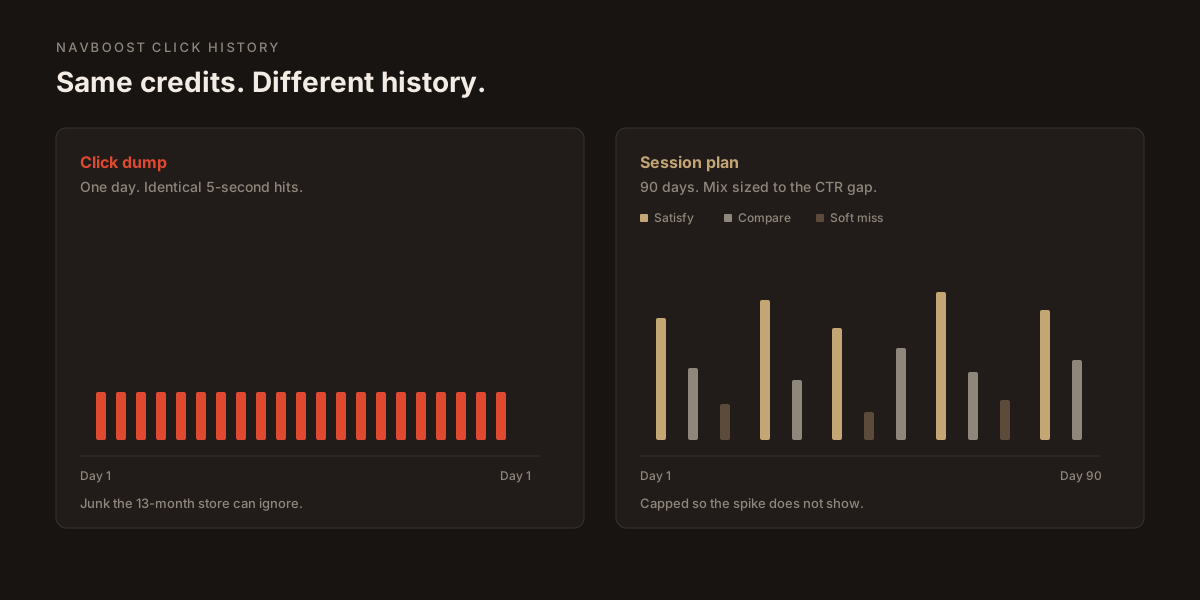
NavBoosted sells a session plan (outcome mix, dwell, geo, horizon), not a daily dump of identical clicks. Credits: Trial 150, Starter 400 for $49, Pro 2000 for $149, Agency 8000 for $399. They do not expire. Rank in the app is SearchAPI. We do not claim GSC-verified traffic.
What happens on a real click
Chrome records query, position, time, rough location. While the visitor is on the page, Google can see dwell until SERP return, extra pageviews, scroll, and whether search resumed. NavBoost classifies: goodClick, badClick, or lastLongestClick (they stopped searching). Accumulated ratios move the URL after Mustang's first-pass score.
Manipulation is steps one and two on purpose, with the classification in mind. A 5-second "visit" is not a ranking tactic. It is a badClick you paid for.
GoodClick shape, pieced together from the leak plus the 2023 Yandex source (short / medium / long click buckets): dwell at least 30–45 seconds, often 2+ minutes; scroll past the fold (50% is a working floor); a second URL on the site is stronger than a single bounce; delayed or absent SERP return; visits spread across hours and days. Identical 60.0-second hits at 3:47 PM every day is how you get filtered.
They told you it was noise
Matt Cutts (2010): Analytics data is not a ranking input. John Mueller (2022): time on site and bounce rate are not ranking factors. Gary Illyes (2023): clicks are too noisy and too easy to fake.
The leak named the NavBoost module, goodClicks, badClicks, ChromeInTotal, lastLongestClicks. Pandu Nayak, Google VP, testified in the DOJ case that NavBoost is one of the most important signals they use. The public line and the internal system were not the same story.
Legal vs ToS vs "does it work"
Generating clicks to your own listing is not a criminal statute. It is against Google's spam policies. Google can ignore the traffic (usual), and in ugly botnet-shaped cases can discount a site's click graph. They rarely send a "you used a CTR tool" manual action. You mostly wasted money.
Detection: yes for bot-shaped traffic. The leak's squashing language is the filter. Authentic fingerprints plus residential IPs plus messy human timing are what the filter is for.
Timing: trending queries can move on Instant Glue (minutes to a day). Most terms wait on the 13-month store. People usually watch 7–21 days for the first SearchAPI wiggle, not overnight #1.
Run the browser test (47 fingerprint checks) before you spend a Starter pack. If the browser fails Sannysoft-class tests, NavBoost is not going to treat those sessions as unsquashed, and neither should you.
Emily Highsmith
SEO Research & Content
SEO researcher and content strategist specializing in search engine ranking factors, user engagement signals, and technical SEO. Passionate about demystifying how search algorithms work.
Continue Reading
Bot Detection Software: What SEO Professionals Need to Know (2025)
Bot detection is why most CTR dashboards show clicks and rankings do not move. Google squashes fake browsers before NavBoost. Test fingerprints, IPs, and timing before you spend credits.
NavBoost Revealed: What the Google API Leak Exposed About Click-Based Rankings
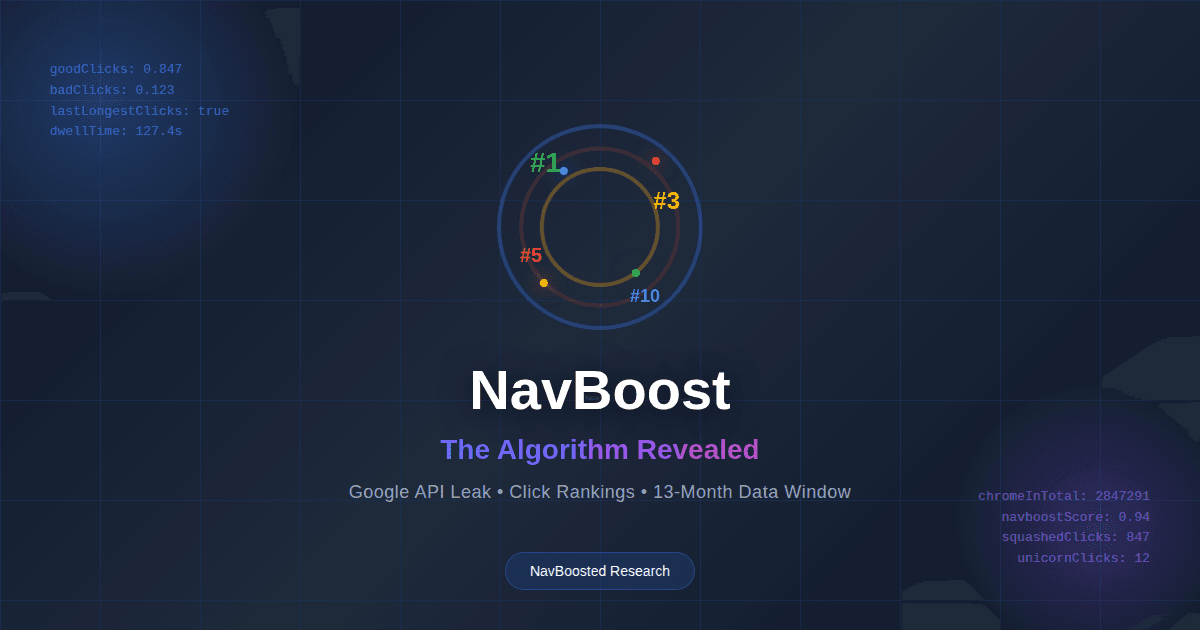
The May 2024 Google API leak documented NavBoost, a click re-ranker on Chrome data with a 13-month memory. Here is the architecture, the click types, and what actually changes in an SEO program.