Bot Detection Software: What SEO Professionals Need to Know (2025)

Bot Detection Software: What SEO Professionals Need to Know (2025)
You bought 500 clicks. The dashboard is green. Rank did not move.
Those visits hit Google's bot filters, got squashed, and never became NavBoost evidence. You paid for a log line.
Bot detection is the gate between "traffic happened" and "the 13-month click store changed." If you run CTR campaigns without testing the browser layer, you are guessing.
What the software is doing
It scores a request as human-shaped or script-shaped. The same stack that stops scrapers and ad fraud is what stands in front of engagement signals.
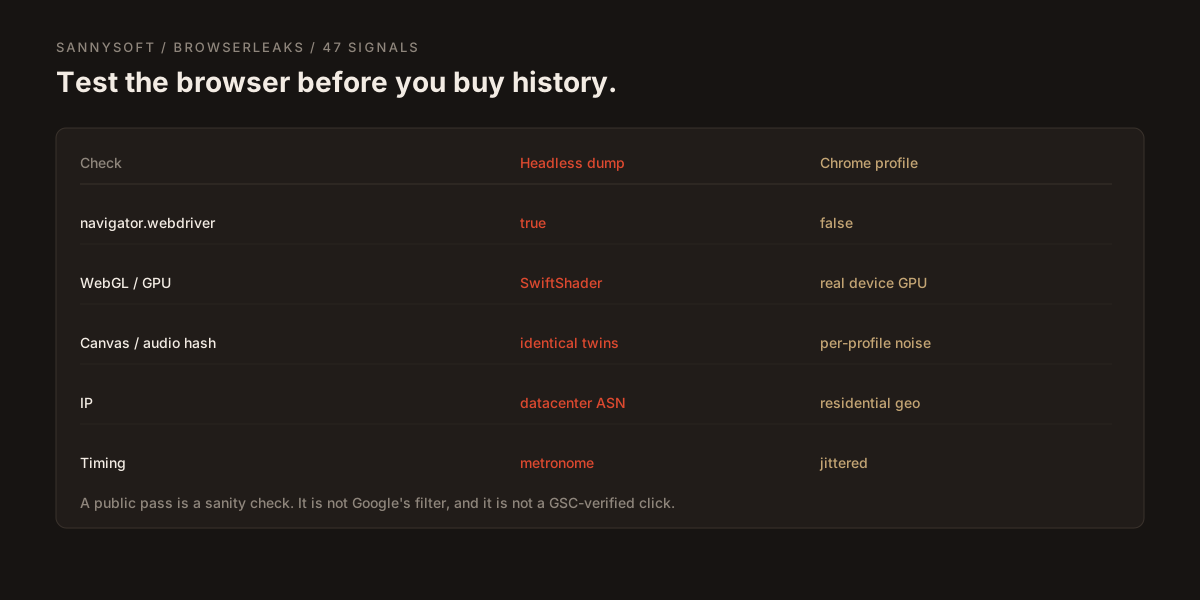
The core trick is fingerprinting: canvas, WebGL, audio, fonts, navigator, plus IP reputation, mouse/timing/scroll, TLS handshake, headers, JS environment. Consistent with a real device: pass. Headless tells, datacenter ranges, metronome timing: flag or drop.
Canvas, WebGL, audio, navigator
Canvas: hidden draw, pixel hash. Real GPUs disagree slightly. Bots reuse one hash, return empty, or claim macOS and paint like Windows.
WebGL: renderer string, vendor, texture limits, extensions, precision. Headless often says llvmpipe or SwiftShader, short extension lists, hardware that cannot exist next to the UA.
AudioContext: process a silent buffer, measure the stack. Null hashes, identical hashes every session, missing API: fail. This one is annoying to fake well.
navigator: webdriver === true is the beginner death. Missing plugins, platform vs UA fights, generic language lists, 2 TB of deviceMemory, 128 "cores" on a laptop UA, screens that are not real products. Humans are messy and internally consistent. Scripts are tidy and contradictory.
IP story
AWS/DigitalOcean/Hetzner ranges are a red flag for "I am a dentist in 11201." Residential Comcast/Verizon/AT&T-class addresses are what people actually use. Known VPN exits are listed. Detection asks: datacenter? proxy list? geo vs claimed city? historical fraud score?
Residential is required and not sufficient. A residential IP in front of webdriver: true still dies.
Behavior after the paint
No mouse, or a perfect diagonal, is a bot. Humans curve, pause, overshoot.
Time to first click: people take a couple of seconds to a handful; scripts click on DOMContentLoaded. Scroll velocity that never jitters. Every session an identical 60.0 second dwell. Never clicking anything vs always clicking the same pixel. Randomness, within a realistic band, is the tell that you are not a cron job.
Why this is an SEO problem
Google has Chrome, years of click graphs, and no reason to let you vote with Puppeteer. The leak's squashed vs unsquashed language is this filter in ranking clothes. Squashed clicks do not become goodClicks. They become approximately nothing.
Cheap CTR tools: Selenium without stealth, shared proxy pools, one canvas for a thousand "users," zero mouse. The UI still says delivered. NavBoost never saw a voter.
1,000 delivered and 900 squashed is a 90% waste. Test before the invoice.
NavBoosted's public browser test checks 47 signals (fingerprint, behavior presence, network). Free, short. It is not Google's internal model. If you fail us, you will fail them. If you pass, you have a better shot at unsquashed, not a certificate.
We run residential pools with ZIP targeting because a Brooklyn query with a Dallas datacenter IP is a consistency fail. Session plans (satisfy / compare / soft miss, dwell, horizon) exist so timing is not a square wave. Credits: Trial 150, Starter 400 for $49, Pro 2000 for $149, Agency 8000 for $399. SearchAPI for rank. No "zero detections" claim.
Who else builds this (so you know the bar)
Cloudflare Bot Management: fingerprints, known automation, their network's IP intel, behavior. On a large share of the top million. List price in the tens to low hundreds of dollars per month at small scale.
DataDome: ML behavior, live fingerprints, TLS, CAPTCHA. They advertise very high catch rates. Enterprise money.
HUMAN (PerimeterX): "human signatures," device checks, network, staged challenges. Fortune-500 shelf.
Imperva: signatures, behavior, CAPTCHA, rate limits. Strong on known bots, less magic on custom stealth.
If Cloudflare classifies you as automation, assume Google can. That is the quality bar for a tool, not a $19 shared-headless panel.
Passing on purpose (CTR context)
UA, fonts, DirectX/Metal, canvas, and WebGL must agree about the OS. Unique fingerprint per session. A little canvas jitter is normal; bitwise-identical forever is not. If you claim 8 cores, render like 8 cores, not like a VM.
Skip datacenter IPs. Match geo to the keyword.
Spread clicks through the day. Dwell 45s, 73s, 122s, not 60, 60, 60. Real browsers (not headless with a stealth plugin and a prayer) still miss sensors, plugins, and performance tells.
Test: our 47-signal check, Cloudflare if you have a spare domain, PixelScan or CreepJS for a second opinion. Retest after Chrome's 6-week trains and after your vendor ships "updates."
FAQ the sales call always hits
Google does not catch every bot. They catch the lazy majority. The leak exists because some artificial engagement is still in the graph as unsquashed. That is the target, not "undetectable."
Detected CTR traffic: usually ignored, not a manual penalty. Extreme botnet shapes can discount a site's click history. The common case is you burned credits.
Residential proxies alone: no. Need IP plus fingerprint plus behavior. Miss one, detection odds jump.
How often to test: before you pick a vendor, before launch, monthly, on tool updates, and whenever clicks "deliver" and SearchAPI does not budge.
The 13-month store only moves on clicks that survive this layer. Test the browser. Then buy sessions.
Emily Highsmith
SEO Research & Content
SEO researcher and content strategist specializing in search engine ranking factors, user engagement signals, and technical SEO. Passionate about demystifying how search algorithms work.
Continue Reading
NavBoost Revealed: What the Google API Leak Exposed About Click-Based Rankings
The May 2024 Google API leak documented NavBoost, a click re-ranker on Chrome data with a 13-month memory. Here is the architecture, the click types, and what actually changes in an SEO program.
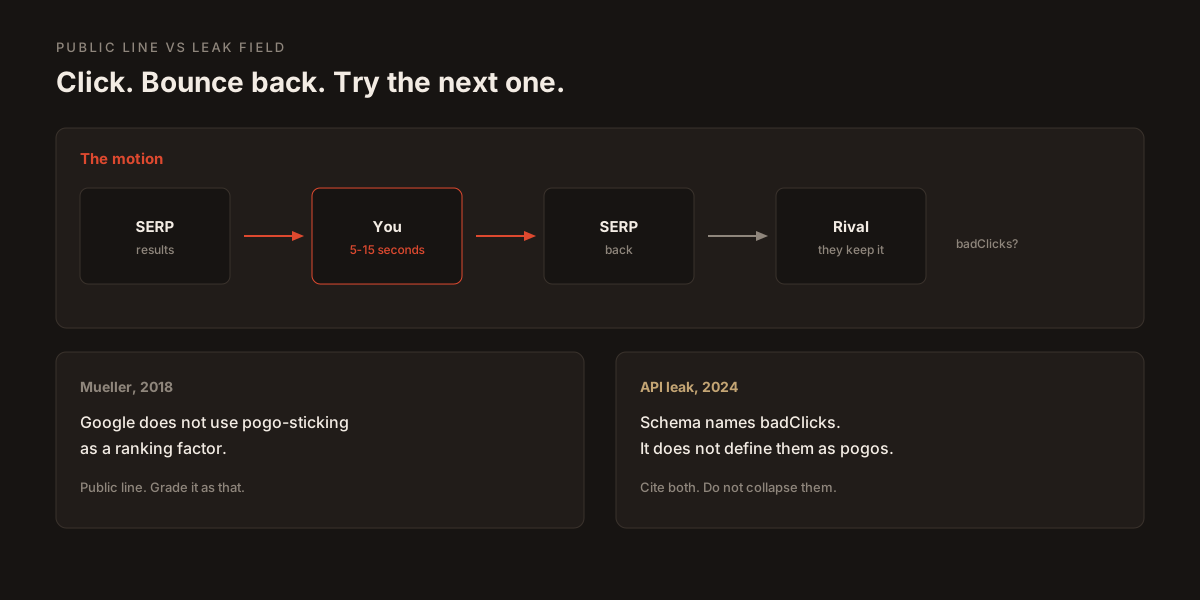
Pogo Sticking SEO: What It Is & Why It Kills Rankings (2025)
Pogo sticking is a quick return to the SERP after a click. NavBoost files that as a badClick. Here is how to spot it, what causes it, and how to keep dwell long enough that the back button stays unused.