Pogo Sticking SEO: What It Is & Why It Kills Rankings (2025)

Pogo Sticking SEO: What It Is & Why It Kills Rankings
Rankings can slide with no content change, no obvious algorithm update, and no lost links. Before you rewrite the site, look at what happens in the eight seconds after the click.
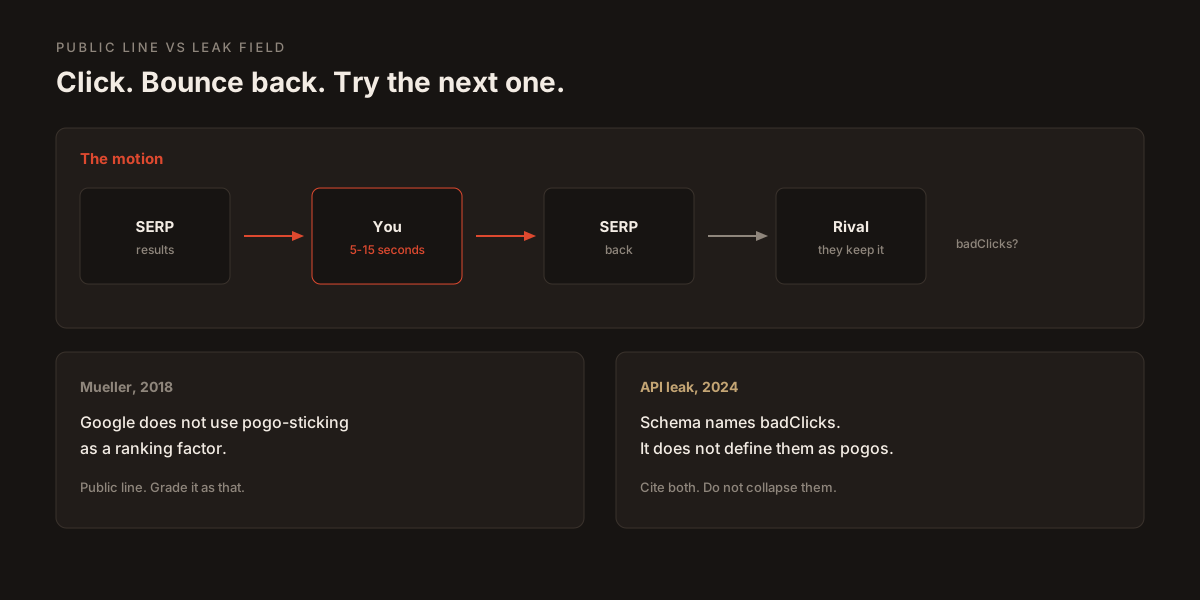
The May 2024 ContentAPI leak named badClicks as a NavBoost metric. Pogo-sticking is the user motion that produces them.
A user searches "how to improve local SEO", clicks your result in position 3, stays eight seconds, hits back, and clicks position 4. That hop is the pogo stick: the result failed the intent test in public, in Google's own UI.
The name is the motion. Bounce from listing to listing until one page actually answers the query.
Bounce rate is a different instrument
Analytics bounce rate is "left after one page." Google does not sit in your GA4 property. It sees Chrome returning to google.com/search.
Someone can bounce and still be a goodClick: three minutes of reading, tab closed, search over. Someone can click two internal links (not a bounce) and still pogo-stick if they are back on the SERP in 20 seconds. NavBoost cares about the SERP return, not your bounce column.
That is why matching the meta description to the first screen of content matters more than "reducing bounce" as a vanity KPI.
What the leak actually said
The leaked modules track badClicks (fast return to search), goodClicks (long dwell, no quick bounce-back), and lastLongestClicks (search journey ends on you). Google VP Pandu Nayak, under oath in the DOJ case, called NavBoost one of the most important ranking signals. Click quality is how that system re-ranks a result after Mustang has already scored the document.
Enough badClicks and the re-ranker has a reason to bury you. You do not need a manual action. The 13-month window just keeps the scar tissue around.
Three ways you train the back button
Titles that lie. Your title says "7 ways to improve local SEO" and the body is a lecture on why SEO matters. The user came for a list. Give them seven concrete moves in the first 300 words, or stop promising a list.
Pages that hitch. Three-plus seconds of LCP and many people never see the H1. Target LCP under 2.5s. Compress images, kill unused JS, put a CDN in front if you do not have one.
Content that misses the query. Thin, generic, or a keyword glued to the wrong intent. Put the answer, the number, or the method in the first 100 words. Curiosity-gap titles still have to pay off on arrival.
If you are already matching intent and the page is fast, the remaining lever is session quality: dwell long enough, scroll far enough, that NavBoost has no reason to file a badClick. NavBoosted campaigns set dwell (often 60–300 seconds), scroll depth, and a mix of satisfy / compare / soft-miss outcomes on a horizon, not a same-day click dump. Rank checks go through SearchAPI. We do not market GSC-verified clicks.
Can a competitor pogo-stick you on purpose?
Yes. That is negative CTR: click, 5–10 seconds, back to SERP, repeat. It writes badClicks into the same ledger you are trying to fill with goodClicks. Defense is ratio, not a support ticket. You need more genuine (and, if you use a tool, authentic) long sessions than they can spray as short ones. How negative CTR attacks work covers detection vs a normal ranking slump.
Chrome is the sensor
Click timestamp, URL, SERP return time, next result clicked. The delta is dwell. The next click is what makes it a pogo stick rather than a satisfied exit.
Rough bands (you will not see these in Search Console)
Google does not publish your pogo-stick rate. Treat these as working heuristics from the leak language plus Yandex's short-click buckets, not as a GSC report:
- Under 10% of clicks bounce back fast: you are mostly in goodClick territory
- 10–20%: watch titles and speed
- 20–40%: intent mismatch is likely
- Over 40%: NavBoost has a pile of evidence you do not satisfy the query
Last useful check: if position holds but engagement in Analytics collapses, look at speed and snippet honesty before you buy more sessions. If engagement looks fine and position still dies on one cluster of queries, then look at badClick attacks.
Emily Highsmith
SEO Research & Content
SEO researcher and content strategist specializing in search engine ranking factors, user engagement signals, and technical SEO. Passionate about demystifying how search algorithms work.
Continue Reading
Bot Detection Software: What SEO Professionals Need to Know (2025)
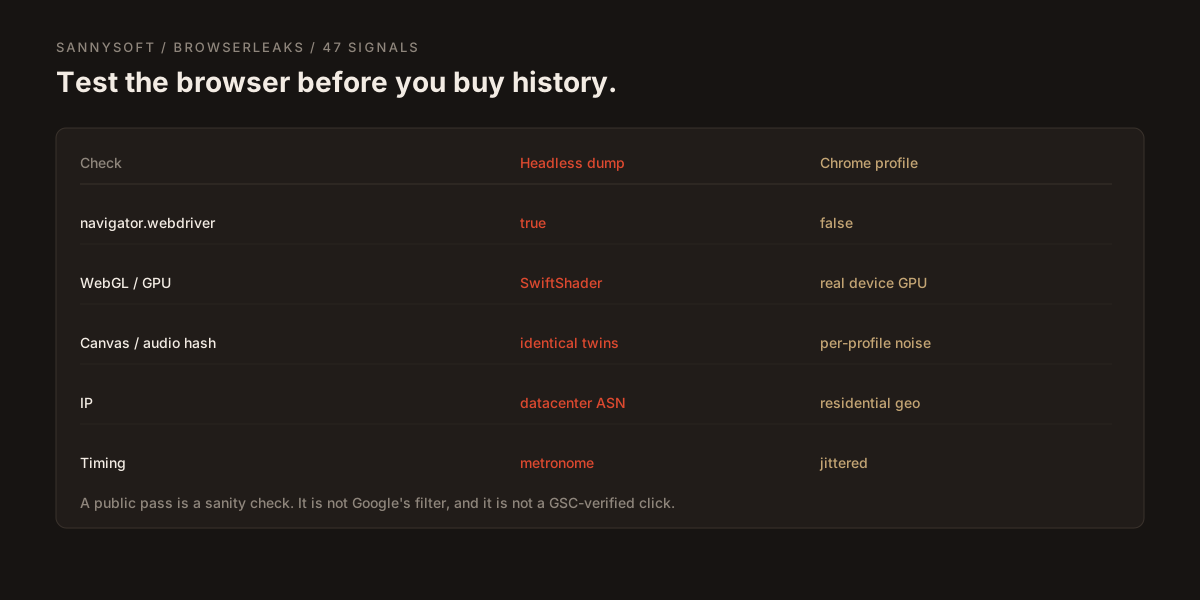
Bot detection is why most CTR dashboards show clicks and rankings do not move. Google squashes fake browsers before NavBoost. Test fingerprints, IPs, and timing before you spend credits.
NavBoost Revealed: What the Google API Leak Exposed About Click-Based Rankings
The May 2024 Google API leak documented NavBoost, a click re-ranker on Chrome data with a 13-month memory. Here is the architecture, the click types, and what actually changes in an SEO program.